

A simple guide for every stage of life — for the Indian reader
⏱ 4 min read · 💰 Beginner Friendly
Life is unpredictable. A job loss. A medical emergency. A sudden car repair. These things don’t come with a warning.
An Emergency Fund — also called a Rainy Day Fund — is money you set aside only for these moments. It’s not for a vacation. Not for a new phone. It’s your financial airbag.
Without one, a single crisis can force you into debt, break your investments, or cause serious stress. With one, you stay calm and in control.
Let’s build yours.
What Exactly Is an Emergency Fund?
It’s a pool of money that:
- Is easily accessible (not locked in FDs or mutual funds)
- Covers 3 to 6 months of your essential expenses
- Is kept separate from your regular savings account
- Is only touched during genuine emergencies
Think of it as a fire extinguisher. You don’t use it every day — but when you need it, you need it immediately.

How Much Should You Save? The Simple Formula
Your Emergency Fund Target = Monthly Essential Expenses × Number of Months
What Counts as “Essential Expenses”?
| Essential (Include ✅) | Non-Essential (Exclude ❌) |
|---|---|
| Rent or home loan EMI | OTT subscriptions |
| Groceries & utilities | Dining out |
| School or college fees | Shopping & clothing |
| Insurance premiums | Gym memberships |
| Basic transport costs | Travel & holidays |
| Medicines & health costs | Entertainment |
Target by Age and Family Situation
Your target changes as your life does. Here’s a simple guide:
| Life Stage | Who You Are | Target | Why |
|---|---|---|---|
| 🧑💻 Early Career (22–28) | Single, no dependents | 3 months | Lower expenses, fewer obligations |
| 💍 Newly Married (28–34) | Couple, no kids yet | 4 months | Two incomes but shared goals |
| 👨👩👧 Young Family (30–40) | Kids at home | 6 months | School fees, medical needs, EMIs |
| 👴 Supporting Parents (35–50) | Ageing parents dependent on you | 6–9 months | Medical emergencies are unpredictable |
| 🏠 Single Income Household | One earning member | 6–9 months | No backup if income stops |
| 🏢 Self-Employed / Freelancer | Variable income | 9–12 months | Income can disappear suddenly |
⚠️ Important: If you have a home loan EMI, always include it in your monthly essential expenses. Missing an EMI damages your credit score.
How to Build Your Emergency Fund: Step by Step
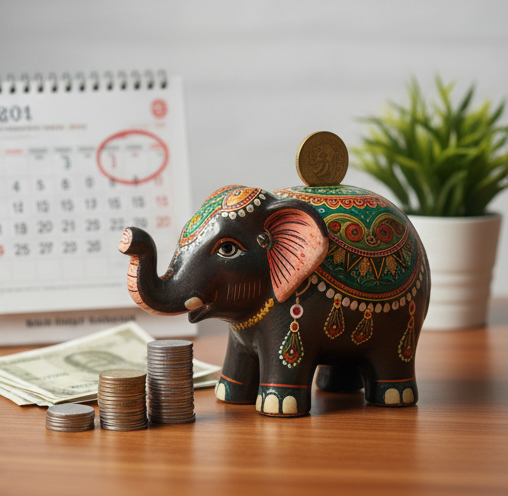
Building it can feel overwhelming. Break it into small steps.
Step 1 — Calculate your monthly essential expenses Add up rent, groceries, EMIs, school fees, insurance, and medicines. That’s your base number.
Step 2 — Set your target Multiply by 3, 6, or 9 depending on your life stage from the table above.
Step 3 — Open a separate account Don’t mix it with your salary account. A high-interest savings account or a liquid mutual fund works well.
Step 4 — Start small, stay consistent You don’t need to build it overnight. Even ₹2,000–₹5,000 a month adds up over time.
Step 5 — Automate it Set up an auto-transfer on your salary day. Pay your emergency fund before you spend on anything else.
Where Should You Keep It?
The key is: safe + accessible + earning a little interest.
| Option | Accessibility | Returns | Best For |
|---|---|---|---|
| 💳 High-Interest Savings Account | Instant | 3–7% p.a. | Everyone — simplest option |
| 💧 Liquid Mutual Funds | 1 business day | 6–7% p.a. | Those comfortable with apps |
| 🏦 Sweep-in Fixed Deposit | Same day | 6–7% p.a. | Those who want slightly better returns |
| ❌ Stock Market | Days + risk | Unpredictable | Never use for emergency fund |
💡 Pro Tip: Split your fund — keep 1 month’s expenses in your savings account for instant access, and the rest in a liquid mutual fund for better returns.
A Real-Life Example
Meet Priya, 34, married with one child in school. Her husband is the sole earner.
| Expense | Monthly Amount |
|---|---|
| Home loan EMI | ₹18,000 |
| Groceries & utilities | ₹12,000 |
| School fees (monthly) | ₹6,000 |
| Insurance premiums | ₹4,000 |
| Transport & fuel | ₹3,000 |
| Medicines | ₹2,000 |
| Total Essential Expenses | ₹45,000 |
Priya’s Emergency Fund Target (6 months) = ₹45,000 × 6 = ₹2,70,000
She starts by saving ₹5,000/month. In 54 months (4.5 years) she’ll have her full fund — without stress.
Common Mistakes to Avoid
❌ Using it for non-emergencies — A sale on electronics is not an emergency.
❌ Investing it in stocks or crypto — These can crash exactly when you need the money.
❌ Not replenishing after use — If you dip into it, rebuild it before anything else.
❌ Keeping it in your regular account — It will quietly get spent.
The Bottom Line
An emergency fund is not exciting. It won’t make you rich overnight. But it will keep a bad situation from becoming a disaster.
Start small. Stay consistent. Keep it separate. And never touch it unless life truly demands it.
Because when the rain comes — and it will — you want an umbrella ready. ☂️
Disclaimer: This article is for educational purposes only and does not constitute financial advice. Please consult a SEBI-registered financial advisor for personalised guidance.